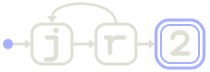
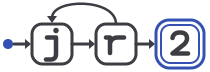
Start a run for each alert
Start one run of a Workflow for each alert that an alert service sends to a Hook.
The example has three Workflows and one Hook. The alert service sends each new issue to the Hook sentry. The Workflow alerts is a standing Pool of runs: its push Source holds each alert, and the Pool starts one run of triage for each alert, with at most 8 live at one time. A triage run waits until a person takes the alert or dismisses it.
@jr2/orchestrator/hooks/webhook has webhook(), which makes the kind of a service that jr2 ships no kind for. It is part of @jr2/orchestrator, so your Instance installs nothing more.
Write the kind of the service
The alert service signs the raw body with a shared secret, and puts the HMAC-SHA256 in hex in the header sentry-hook-signature. The header sentry-hook-resource and the field action give the event key, such as issue.created. The header request-id is the id of the delivery. Save the kind as hooks/sentry.ts, beside workflows/, because it is not a Workflow:
import { z } from "zod";
import { webhook } from "@jr2/orchestrator/hooks/webhook";

// An alert service that jr2 ships no kind for. The service signs the raw body with a shared secret
// (sha256, hex) in the header sentry-hook-signature. The event key is the resource and its action,
// such as issue.created. The module is in `hooks/`, not in `workflows/`, because it is not a Workflow.
export const sentry = webhook({
  id: "sentry",
  events: {
    "issue.created": z.looseObject({
      data: z.looseObject({
        issue: z.looseObject({ id: z.string(), title: z.string(), level: z.string() }),
      }),
    }),
  },
  verify: { mac: { header: "sentry-hook-signature" } },
  key: { name: { header: "sentry-hook-resource" }, action: { json: "action" } },
  delivery: { header: "request-id" },
});

declare module "@jr2/orchestrator/hooks" {
  interface HookKinds {
    sentry: typeof sentry;
  }
}
The declare module block adds the kind to the types of the handlers. A handler for an event key that the kind does not give does not compile.
Write the Workflow of one alert
Save workflows/triage.ts. Its door takes the issue id and the title of one alert:
import { assign } from "xstate";
import { z } from "zod";
import { defineEvent, jr2Setup } from "@jr2/orchestrator";

// The two answers of the person on call.
const take = defineEvent({
  name: "take",
  description: "I take this alert.",
  input: z.object({ who: z.string().min(1) }),
});
const dismiss = defineEvent({
  name: "dismiss",
  description: "This alert needs no work. Say why.",
  input: z.object({ reason: z.string().min(1) }),
});

type Context = { issue: string; title: string; who?: string };

// One run for each alert. The run waits until a person takes the alert or dismisses it.
export const machine = jr2Setup({
  types: {} as { input: { issue: string; title: string }; context: Context },
  events: [take, dismiss],
}).createMachine({
  id: "triage",
  // The door: the alerts Pool sends this input for each alert.
  input: z.object({ issue: z.string(), title: z.string() }),
  context: ({ input }) => ({ issue: input.issue, title: input.title }),
  initial: "waiting",
  states: {
    waiting: {
      invoke: {
        src: "gate",
        input: ({ context }) => ({ meta: { issue: context.issue, title: context.title } }),
      },
      on: {
        take: { target: "taken", actions: assign({ who: ({ event }) => event.who }) },
        dismiss: "dismissed",
      },
    },
    taken: { type: "final" },
    dismissed: { type: "final" },
  },
});
Write the standing Pool
Save workflows/alerts.ts:
import { z } from "zod";
import { carry, dispatch, pool, skip, source } from "@jr2/orchestrator";
import type {} from "../hooks/sentry.ts";

// The door of the triage Workflow: each alert is one run of it.
const triageDoor = z.object({ issue: z.string(), title: z.string() });

// A push Source: each Hook delivery carries an alert, and the Pool holds it until a slot is free.
const alerts = source({
  item: z.object({ issue: z.string(), title: z.string(), level: z.string() }),
  hooks: {
    sentry: {
      "issue.created": ({ payload }) => {
        const issue = payload.data.issue;
        if (issue.level !== "error" && issue.level !== "fatal") return skip(`level is ${issue.level}`);
        return carry({ issue: issue.id, title: issue.title, level: issue.level });
      },
    },
  },
});

// A standing Pool of runs: one triage run for each alert, at most 8 live at once.
export const machine = pool(dispatch("triage", { input: triageDoor, wait: true }), {
  id: "alerts",
  standing: true,
  source: alerts,
  itemId: (alert) => `sentry-${alert.issue}`,
  cap: 8,
  itemInput: (alert) => ({ issue: alert.issue, title: alert.title }),
});- The Source has
itemandhooks, and no read: it is a push Source. Its handler givescarry(item)for an alert of the levelerrororfatal, andskip(reason)for the other levels. - The worker is
dispatch("triage", { input, wait: true }), so each alert is a run of its own oftriage. itemIdis the key of the run. A second delivery of the same alert finds the run of the first one, and starts no second run.standing: true: jr2 starts the run of the Pool, and keeps one live run of it.
Declare the Hook
Add the Hook to jr2.config.ts, and its secret to the secrets list:
import { defineConfig, secret } from "@jr2/orchestrator";
import { sentry } from "./hooks/sentry.ts";

export default defineConfig({
  // The Hook's secret is an entry of the list. jr2 up places SENTRY_HOOK in the Instance Effector.
  secrets: [{ name: "SENTRY_HOOK", value: process.env.SENTRY_HOOK }],
  hooks: {
    // POST /hooks/sentry: the alert service signs each delivery with SENTRY_HOOK. The Hook brings
    // items to the Pool of the alerts Workflow, through its source Gate, and to nothing more.
    sentry: sentry({ secret: secret("SENTRY_HOOK"), may: { answer: ["alerts"] } }),
  },
});
may.answer names alerts, because the Hook brings items to the Pool through the Pool's source Gate. Put the secret in .env:
SENTRY_HOOK=<secret><secret> is a long random value. Give the alert service the same value.
Converge
jr2 up…
standing: sentry → alerts → triage
…
secret SENTRY_HOOK: an Effect secret in the Instance Effector (hook sentry)
the Instance Effector: holds SENTRY_HOOK
…
standing alerts → triage: live, run 0d08bbbc-d34e-47fb-9b4b-8e788e328eb4, 0 held items
…jr2 up puts the secret in the Instance Effector only, which checks each signature. jr2 starts the run of alerts at this publish. Your run id is different.
Set up the alert service
The address of the Hook is POST /hooks/sentry on the Orchestrator. jr2 up makes the Service jr2-orchestrator on port 4000, with no address outside the cluster. Give the Service an address that the alert service can reach, such as an ingress. Then give the service the URL https://<host>/hooks/sentry and the secret.
Send a test delivery
You can sign a delivery yourself. Forward a port to the Orchestrator, and keep this command open:
kubectl -n <namespace> port-forward svc/jr2-orchestrator 4000:4000In a second terminal, sign a body with the secret and send it:
BODY='{"action":"created","data":{"issue":{"id":"4505","title":"TypeError in checkout","level":"error"}}}'
SIG=$(printf '%s' "$BODY" | openssl dgst -sha256 -hmac "$SENTRY_HOOK" | sed 's/^.* //')
curl -s -X POST http://localhost:4000/hooks/sentry \
  -H "Content-Type: application/json" \
  -H "sentry-hook-resource: issue" \
  -H "request-id: test-1" \
  -H "sentry-hook-signature: $SIG" \
-d "$BODY"{"delivery":"test-1","seen":false,"delivered":[],"refused":[],"ignored":0,"sources":[{"pool":"0d08bbbc-d34e-47fb-9b4b-8e788e328eb4","workflow":"alerts","source":"source","verdict":"held","key":"sentry-4505"}]}The Pool holds the alert, and starts a run of triage for it when a slot is free. Send the same command again. The answer has "seen":true, because the Hook got the id test-1 before, and the Pool starts no second run.
Follow the alerts
jr2 runs lists the run of triage for the alert. jr2 status <run id> of that run prints, in its dispatched by: line, the run of the Pool, the key sentry-4505, and the Hook delivery that carried the alert. The person on call answers its Gate:
jr2 send <run id> --gate waiting --event take --input '{"who":"<you>"}'<run id> is the id of the triage run, and <you> is your name. To see what the door of the Hook did with each delivery that jr2 keeps (runs.retain, 30 days by default), print its log:
jr2 hooks sentryTo stop the alerts for a time, cancel the run of alerts. A cancel of a standing Pool is a pause: the Hook's answer has the verdict paused, and the Pool holds nothing. jr2 run alerts resumes it.
Rules
pool()refuses a Pool of runs that does not stand:pool("<id>"): a Pool of runs stands: give it `standing: true`. A Pool of runs that a Caller starts and that ends is not offered: its itemId is a key that lives for runs.retain past the run, so a second batch in that time does no work (ADR-0017)pool()refuses adispatchslot withoutwait: true:pool("<id>"): its dispatch slot for "<workflow>" has no `wait: true` — with `started` alone, the Pool cannot know when a run ends, and `cap` counts nothing (ADR-0017)pool()refuses adispatchslot with atarget:pool("<id>"): its dispatch slot for "<workflow>" has a `target` — a Pool of runs on another Orchestrator is not designed: remove the target (ADR-0017)pool()refuses a Pool of runs withoutcap:pool("<id>"): a Pool of runs states its `cap`, a whole number above 0: the most live runs at once (ADR-0017)pool()refuses a push Source on a Pool that does not stand:pool("<id>"): a push Source needs a standing Pool of runs: a Pool that ends when it drains would end at once (ADR-0017)jr2 uprefuses a standing Pool that is not the top Machine of its Workflow:refusing: workflow "<workflow>": machine "<machine>" composes the standing Pool "<id>" — a standing Pool is the top Machine of its Workflow, because jr2 keeps one run of each standing Workflow: move the Pool to a file of its own in workflows/ (ADR-0017)jr2 upwarns when two standing Pools dispatch to one Workflow:warning: the standing Pools "<pool>" and "<pool>" each dispatch to "<workflow>": `cap` is for each Pool, so one item that two Sources carry can take a slot in each, and the caps add (ADR-0017)- The Orchestrator refuses
jr2 runof a standing Workflow whose run is live, with the status code409:"<workflow>" is a standing Workflow, and its run <run id> is live: jr2 keeps its run, and `jr2 run` only resumes a paused one (ADR-0017) - The Orchestrator refuses a
dispatchto a standing Workflow:"<workflow>" is a standing Workflow: jr2 starts its run, and a dispatch cannot (ADR-0017) - When the Pool holds
holditems (1000 by default), the door answers 429 with the verdicthold-full, and the service can send the delivery again. - While the Pool waits for the back-off of a hand-over, it has no live run, and the door answers 503.
- A Hook whose
may.answerdoes not name the Workflow of the Pool brings it nothing.
Read next
- Pools and Sources
- Callers and Hooks
- Write a Hook kind, for a service that
webhook()cannot read - Start a run from a run
- Reference:
pool(),source(),carry(),skip(),dispatch()andwebhook() - ADR-0017: a standing Pool, and a Hook that brings items to it
- ADR-0078: a Hook, and
webhook()